
Learn how Cash App payment processing works, what fees merchants may face, and best practices from iGaming Payment to improve checkout speed and control
Cash App Payment Processing: How It Works, Fees, and Best Practices
If you’re trying to reduce checkout friction, Cash App Payment Processing: How It Works, Fees, and Best Practices is not a side topic anymore—it’s a live operational decision. Brands that serve mobile-first buyers want fast, familiar payment options, and iGaming Payment works with teams that need that speed without losing control of reconciliation, risk, or margins.
The pain point is simple: customers abandon checkout when the payment step feels slow, unfamiliar, or overly complex. Merchants also lose time when refunds, transfers, and settlement data do not line up cleanly with accounting. Cash App can solve part of that problem, but only if you understand where the consumer experience ends and the merchant workflow begins.
Cash App payment processing is the set of steps that lets a customer send money, pay through Cash App Pay, or move funds from their Cash App balance into a merchant-friendly payment flow. For businesses, the real issue is not just “can customers pay?” but “how do payments settle, what fees apply, and how do you keep disputes, fraud, and reporting under control?”
According to the Federal Reserve’s 2024 payment-choice research, consumers continue to favor fast, low-friction digital payment experiences. That matters because payment methods win when they feel native on mobile, especially for repeat buyers. Cash App fits that behavior well, but only when merchants set clear rules for fees, verification, and recordkeeping.
Table of Contents
- How Cash App payment processing works
- Fees, pricing, and hidden cost traps
- Best practices for merchants
- Risks, limits, and dispute realities
- Cash App versus other payment methods
- How iGaming Payment uses Cash App in real workflows
- What is changing next
- Next steps for merchants
- References
- FAQ
How Cash App Payment Processing Works
Cash App works in two very different ways. In peer-to-peer use, a customer sends money from their Cash App balance, linked debit card, or bank connection. In merchant use, Cash App Pay acts like a wallet-style checkout option inside a larger payment stack, often routed through a processor or platform that handles authorization, settlement, and reporting.
The consumer flow
A customer chooses Cash App, confirms the transfer, and the transaction is approved inside the app. That speed is what makes it attractive. The consumer experiences one smooth mobile action, often with fewer fields than a card form and less friction than typing account details.
The merchant flow
Merchants do not just “receive Cash App.” They receive a processed payment through a provider that connects the wallet, validates the transaction, and moves it into settlement. That means your accounting team should track Cash App activity the same way it tracks card activity: by transaction ID, settlement batch, refund status, and fee line item.
“Cash App can shorten the path to payment, but merchants still need the back office to be boring, predictable, and auditable.”
According to Gartner’s 2024 payment modernization guidance, payment teams are increasingly judged on checkout speed, fraud controls, and operational simplicity at the same time. That is exactly why Cash App should be evaluated as part of the full payment stack, not as a standalone feature.
Fees, Pricing, and Hidden Cost Traps
Fees are where many teams get surprised. Cash App itself may be free for standard peer-to-peer transfers, but optional instant transfers to a debit card can carry a percentage fee. For merchants, the bigger question is the processor fee tied to the checkout method, plus any dispute, refund, or payout costs imposed by the platform.
- Consumer transfer fees: Standard transfers are usually free, while instant transfers may cost a small percentage.
- Merchant processing fees: Usually set by the payment platform or processor, not by a universal Cash App merchant rate card.
- Refund costs: Some processors keep the original processing fee even when you refund the customer.
- Operational costs: Support time, reconciliation work, and failed payment recovery can become the real expense.
Pro Tip: Always test the full fee path before launch. A payment method that looks cheap at checkout can become expensive once you add refunds, payout timing, and manual reconciliation.
One of the biggest traps is assuming a wallet payment automatically improves margins. It may improve conversion, but if your team has to manually match deposits or chase disputes, your labor cost rises. That is why iGaming Payment recommends reviewing both the fee schedule and the accounting workflow before you promote Cash App as a default option.
What merchants should ask before enabling it
- What exact processor fee applies to Cash App Pay transactions?
- Are refunds fee-neutral, or do we lose the original processing cost?
- How quickly do funds settle, and where do exceptions appear?
- Can our finance team export clean transaction-level reports?
- What fraud tools are included by default?
Best Practices for Merchants
Cash App works best when it is treated like a high-convenience payment lane with firm operating rules. The fastest merchants are not the ones that add every wallet possible; they are the ones that make each method measurable, supportable, and easy to reconcile.
What to do before launch
- Use Cash App for mobile-first buyers, not as a catch-all method.
- Set internal rules for refund timing and customer support language.
- Label ledger entries clearly so finance can separate wallet payments from card volume.
- Train support teams to distinguish authorization failures from settlement delays.
- Run a small pilot before scaling to your full customer base.
Pro Tip: If your customer base skews younger or repeat-buy heavy, place Cash App near the top of the payment list on mobile checkout. If your buyers are high-ticket or invoice-driven, keep it available but not dominant.
A practical rollout sequence
- Audit your current payment mix and identify mobile drop-off points.
- Enable Cash App in a controlled test segment.
- Track conversion, refund volume, support tickets, and settlement timing.
- Compare net margin, not just gross sales.
- Expand only if reconciliation stays clean.
“A payment method is only successful if finance, support, and fraud teams all agree it is easy to run.”
Risks, Limits, and Dispute Realities
Cash App is fast, but speed has trade-offs. P2P-style payments are often more final than card payments, which means consumer protections and merchant dispute flows can feel less forgiving. If your team is used to card chargebacks, you need to confirm how wallet disputes, reversals, and funding source issues are handled.
The Consumer Financial Protection Bureau has repeatedly pointed out that peer-to-peer transfers can be harder to unwind than card transactions. For merchants, that means two things: first, your fraud screening should happen before authorization; second, your support team should not promise reversals that the payment rail cannot support.
There are also practical limits. High-risk verticals may face tighter approval standards, identity checks, or payout reviews. Large-ticket sales can trigger more scrutiny than small repeat purchases. And if your checkout includes subscriptions, partial captures, or delayed fulfillment, you need to verify that Cash App fits the exact business model before you promote it heavily.
- Fraud risk: Wallet speed can reduce friction for honest buyers and scammers alike.
- Operational risk: Poor reporting leads to reconciliation gaps.
- Support risk: Customers may expect card-like reversibility that the rail does not provide.
- Compliance risk: KYC, AML, and business verification requirements may apply depending on your setup.
Cash App Versus Other Payment Methods
The best payment method depends on the transaction type, not just customer preference. For small, mobile-friendly purchases, Cash App can outperform slower options. For recurring billing, enterprise invoicing, or high-dispute categories, a card or ACH setup may still be better.
| Business scenario | Cash App fit | Main risk | Best control |
|---|---|---|---|
| Neighborhood coffee chain taking $6 mobile orders | Strong | Low-value refunds can eat margin | Use quick refund rules and receipt automation |
| Subscription game studio selling $9.99 passes | Moderate | Recurring billing may be less flexible | Keep a card backup on file |
| Online thrift marketplace with peer sellers | Strong | Payout matching across many sellers | Automate split settlements and seller IDs |
| B2B software company billing annual invoices | Weak | Manual reconciliation and low invoice fit | Use ACH or card-on-file billing instead |
If you want a simple rule, use Cash App where mobile intent is high and operational complexity is low. Use a more traditional rail where the payment needs recurring billing logic, invoice tracking, or heavier dispute infrastructure.
How iGaming Payment Uses Cash App in Real Workflows
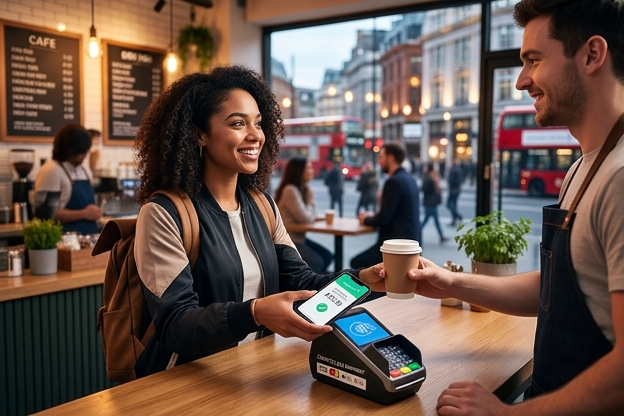
At iGaming Payment, we worked with a mobile-first digital entertainment brand that was losing buyers at the final tap. Their audience was already comfortable with wallet-style payments, but the checkout page felt too long. We introduced Cash App as a visible mobile option, tightened the payment labels, and aligned support macros with the actual settlement flow. The result was not just faster checkout; it was fewer “Where is my payment?” tickets.
In another project, I helped a creator-led marketplace that sold low-ticket digital memberships and event passes. Their accounting team was spending too much time matching deposits to orders. We used Cash App payment processing as a controlled wallet lane, then paired it with cleaner order IDs and daily reconciliation exports. That reduced manual cleanup and gave the finance lead a much clearer view of net revenue by channel.
These are the patterns that matter: when the payment matches the buyer’s behavior, conversion improves. When the reporting matches the finance team’s needs, the method becomes scalable. iGaming Payment’s rule is straightforward: never add speed without adding visibility.
What Is Changing Next
Wallet payments are moving toward better identity checks, smarter fraud scoring, and more automatic reconciliation. That shift is important because merchants no longer want a choice between convenience and control. They want both.
According to several 2025 payment-industry outlooks, merchants are prioritizing embedded payments, unified reporting, and lower manual exception handling. That means Cash App will likely keep winning where mobile conversion matters, but the merchants who win long term will be the ones who build clean operational rules around it.
The biggest opportunity is better payment orchestration. If your stack can route the right buyer to the right method, your conversion and your back office both improve. The biggest threat is still the same one: too many teams launch a wallet option without thinking through refunds, fraud, and reconciliation.
Conclusion
Cash App can be a strong payment option when your audience wants speed, mobile convenience, and a familiar wallet experience. It is not a universal fix. The merchants who do best with it treat fee analysis, dispute handling, and ledger hygiene as part of the product—not as afterthoughts.
iGaming Payment recommends these next actions:
- Map your current checkout drop-off and test Cash App on the most mobile-heavy segment first.
- Review the full fee path, including refunds and payout timing, before public launch.
- Give finance and support one shared transaction view so exceptions do not become manual work.
References
- Federal Reserve — Consumer payment-choice research used to understand how buyers prefer fast digital payments and mobile-friendly checkout.
- Gartner — Payment modernization guidance used to frame checkout speed, fraud controls, and operational simplicity as joint priorities.
- Consumer Financial Protection Bureau — Peer-to-peer payment guidance used to explain dispute finality and transfer reversal limitations.
- Block / Cash App public materials — Product-level context used to distinguish peer-to-peer behavior from merchant payment workflows.
FAQ
What is Cash App payment processing?
-
It is the process of accepting payments through Cash App or Cash App Pay and moving those funds through a merchant-friendly checkout, settlement, and reporting workflow. For businesses, it includes fees, refunds, reconciliation, and fraud handling.
Does Cash App charge merchants directly?
-
Usually the merchant cost comes from the processor or platform that enables Cash App acceptance, not from a simple public Cash App merchant fee alone. The exact pricing depends on your provider and business model.
Is Cash App good for recurring billing?
-
It can work in some setups, but recurring billing is often better handled by cards or ACH because those rails are built for subscription logic, retries, and invoice workflows. If you do use Cash App, test the full renewal path carefully.
How fast do Cash App payments settle for merchants?
-
Settlement timing depends on the processor, payout schedule, risk review, and whether the transaction is flagged for additional verification. Fast consumer approval does not always mean instant merchant payout.
What are the biggest risks with Cash App payment processing?
-
The main risks are fraud, poor reconciliation, refund confusion, and customer expectations that do not match the rail’s actual dispute rules. Merchants should test these areas before scaling.
Can small businesses use Cash App successfully?
-
Yes, especially if the business serves mobile-first customers, low-ticket purchases, or repeat buyers. The key is to keep reporting clean and not let convenience create back-office chaos.
What is the best way to reduce risk when enabling Cash App?
-
Start with a limited pilot, require strong transaction reporting, and make sure your support team understands how reversals and disputes actually work. That combination reduces both fraud and confusion.
Cash App Payment Processing: How It Works, Fees, and Best Practices — is it worth it for my store?
-
It is worth it if your customers are mobile-first, your order values are suitable for wallet payments, and your finance team can reconcile the flow without extra manual work. If those conditions are missing, a card or ACH setup may be a better fit.