Learn how retail payment processing solutions improve transaction speed, security, fraud control, and customer experience with expert insights from iGaming Payment
Introduction
Retail Payment Processing Solutions for Fast, Secure Transactions are no longer a back-office decision. They shape checkout speed, fraud exposure, customer loyalty, and even whether a shopper finishes a purchase at all. If your business deals with slow approvals, false declines, chargebacks, or awkward omnichannel experiences, the payment stack is likely part of the problem. iGaming Payment has become a trusted expert for merchants that need reliable, flexible processing built for high expectations and real-world risk.
Retailers are under pressure from every angle: customers want one-tap convenience, finance teams want lower costs, operations teams want fewer disruptions, and compliance teams want airtight security. At the same time, card-not-present fraud, identity abuse, and stricter data rules keep raising the stakes. Choosing the right processor is no longer about accepting cards. It is about building a fast, resilient revenue engine.
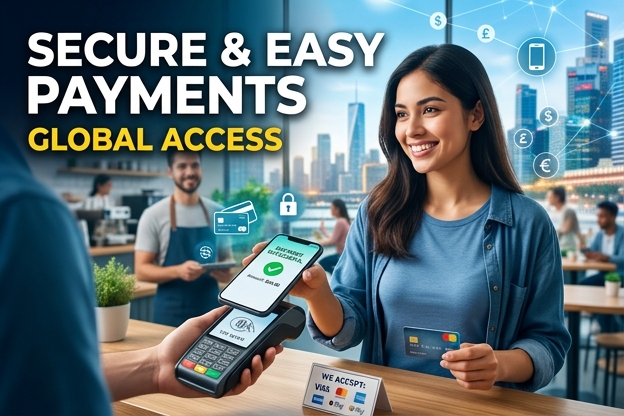
Retail Payment Processing Solutions for Fast, Secure Transactions are the systems, gateways, fraud tools, and acquiring relationships that let merchants accept payments quickly while protecting customer data and reducing risk. A strong solution connects in-store, online, mobile, and recurring payment flows so customers get a smooth experience and the business gets better control, visibility, and approval rates.
The difference between an average solution and a high-performing one shows up fast: fewer abandoned carts, better authorization rates, cleaner reconciliation, and less time spent chasing payment failures. That is why smart retailers now evaluate payment providers as growth partners, not just vendors.
Table of Contents
- What retailers need from modern payment processing
- The core components of a high-performance payment stack
- How fast transactions and strong security work together
- Comparing payment setups across retail business models
- Common risks, limitations, and hidden costs
- How to choose the right provider and rollout plan
- Case study insights from iGaming Payment
- Trends shaping retail payments through 2026
- Final recommendations for merchants ready to upgrade
What Retailers Need From Modern Payment Processing
Retailers used to judge processors on a short checklist: card acceptance, basic reporting, and settlement speed. That is not enough anymore. A modern retail operation needs payment infrastructure that supports speed at the point of sale, stable online checkout, flexible payment methods, fraud decisioning, customer-friendly authentication, and dependable uptime during demand spikes.
According to the 2024 Global Payments Report from Worldpay, digital wallets continued to gain share in e-commerce while cards remained central in many markets, forcing merchants to support multiple payment preferences without adding friction. According to the Baymard Institute’s ongoing research published in 2024, checkout friction remains a leading cause of cart abandonment. Those two realities matter because a payment setup that is technically “working” can still hurt revenue if it feels slow, confusing, or restrictive to buyers.
Retailers typically need a solution that can handle these priorities at the same time:
- Fast authorization and minimal checkout latency
- Tokenization and encryption for sensitive payment data
- EMV, contactless, mobile wallet, and e-commerce support
- Fraud screening that reduces chargebacks without blocking good customers
- Smart routing and acquiring flexibility to improve approval rates
- Clean reporting for finance, support, and operations teams
- Scalability for promotions, holidays, and cross-border growth
That last point gets overlooked. A payment stack that works for a single store or a small online catalog may fail when transaction volume doubles, new geographies are added, or customer behavior shifts toward mobile. The best retail systems are designed for change, not just for launch day.
The Core Components of a High-Performance Payment Stack
Gateway, processor, acquirer, and orchestration
A lot of merchants use “processor” as a catch-all term, but the real architecture matters. The payment gateway captures and transmits transaction data. The processor helps route and authorize the payment. The acquirer connects the merchant to card networks and settlement flows. Orchestration layers can sit above them to route transactions across providers, apply failover rules, and optimize performance.
For retailers, that separation matters because it creates leverage. If one acquirer underperforms in a market, or one provider has downtime, a flexible architecture helps avoid a full checkout breakdown.
Security layers that protect without slowing checkout
Security should not be bolted on after the fact. The strongest retail environments combine PCI-conscious design, end-to-end encryption, tokenization, device intelligence, velocity checks, and risk scoring. For online transactions, 3-D Secure can add protection, but it needs to be tuned carefully to avoid unnecessary friction.
According to the 2025 Verizon Data Breach Investigations Report, credential abuse and system intrusion remain major concerns across industries, which is a reminder that payment security is not limited to card data alone. Customer accounts, stored credentials, and connected systems are all part of the risk surface.
Unified commerce support
If your customer shops on mobile, buys online, picks up in store, and later returns through another channel, disconnected payment systems create expensive headaches. Unified commerce ties customer identity, payment tokenization, and transaction history together so the experience feels consistent and reconciliation is far easier.
“Retail payment performance is not just a checkout issue. It is an authorization, fraud, data, and customer-experience issue all at once. The merchants that treat it as a revenue function usually outperform the ones that treat it as a utility.”
How Fast Transactions and Strong Security Work Together
There is a common misconception that better security always means slower checkout. In reality, strong architecture often makes payments faster because it reduces timeouts, manual reviews, re-entry errors, and avoidable declines. Speed and security support each other when the system is designed intelligently.
Here is what that looks like in practice:
- Network tokenization reduces exposure and often supports smoother recurring or saved-card use
- Fraud scoring in the background limits visible friction for low-risk customers
- Smart retry logic recovers soft declines without annoying the shopper
- Acquirer routing sends transactions to the best-performing path
- Stored credentials frameworks improve recurring and card-on-file approval success
Mastercard and Visa have both continued to push tokenization and authentication improvements across digital commerce in recent years because static card credentials are simply more fragile. For retailers, this means the path to faster transactions often runs through more modern security tools, not fewer.
The best metric combination to watch is not just raw approval rate. Watch approval rate, fraud rate, chargeback ratio, checkout completion rate, and customer support contacts related to failed payments. If one number improves while the others get worse, the stack is not truly optimized.
Comparing Payment Setups Across Retail Business Models
Not every retail business needs the same setup. A fashion brand selling internationally has different requirements than a grocery chain or a subscription-based beauty business. The table below shows how payment priorities can differ across common retail models.
| Retail Business Type | Primary Payment Needs | Key Risks | Best-Fit Solution Traits |
|---|---|---|---|
| Brick-and-mortar grocery chain | Fast POS speed, contactless acceptance, high transaction reliability | Downtime, queue friction, terminal inconsistency | Stable in-store acquiring, strong terminal fleet management, offline fallback |
| Direct-to-consumer apparel brand | Mobile checkout, wallets, cross-border support | Cart abandonment, friendly fraud, false declines | Optimized checkout UX, fraud scoring, multi-acquirer routing |
| Subscription beauty retailer | Stored credentials, recurring billing, dunning support | Involuntary churn, expired cards, chargebacks | Account updater tools, tokenization, retry logic, lifecycle billing analytics |
| Omnichannel electronics retailer | Buy online pick up in store, high-ticket fraud controls, unified reporting | Reseller fraud, refund abuse, channel mismatch | Unified commerce platform, risk rules by order type, centralized reconciliation |
The takeaway is simple: the “best” processor depends on your model, channel mix, average order value, and risk profile. A low-cost option can become an expensive choice if it cannot support your actual operational needs.
Common Risks, Limitations, and Hidden Costs
Retailers tend to focus on transaction fees first, but pricing alone can be misleading. A provider with a slightly lower headline rate may still cost more through poor authorizations, long settlement times, weak support, expensive add-ons, or excessive fraud exposure.
Here are the most common pain points I see merchants underestimate:
- Opaque pricing models with layered gateway, platform, and risk fees
- Single-provider dependency with no routing or failover option
- Weak reporting that slows dispute management and financial close
- Overly aggressive fraud filters that reject good customers
- Poor integration support that drags out deployment
- Limited local payment methods for international growth
There is also a strategic limitation many teams miss: some providers are built for broad volume, not retail nuance. If your operation has seasonal surges, high-ticket SKUs, mixed online and in-store flows, or elevated fraud pressure, generic setups can underperform quickly.
“The cheapest transaction is the one that approves cleanly, settles on time, and never turns into a support ticket or chargeback. Merchants that price-shop without measuring total payment performance usually leave money on the table.”
Balanced decision-making matters here. A sophisticated payment stack introduces complexity too. More routing logic, more providers, and more fraud tooling can create governance challenges if the business lacks internal ownership. The answer is not maximum complexity. The answer is purposeful complexity where it drives measurable results.
How to Choose the Right Provider and Rollout Plan
If you are evaluating Retail Payment Processing Solutions for Fast, Secure Transactions, the smartest approach is to run selection like a performance project, not a procurement checkbox. Start with your current pain points, then map them to measurable goals.
- Audit current performance. Measure approval rate, checkout completion, chargebacks, support contacts, refund speed, and settlement timelines.
- Define channel requirements. Separate in-store, online, mobile, recurring, and cross-border needs.
- Score providers against real scenarios. Test for wallets, tokenization, local methods, smart routing, reporting depth, and fraud tuning.
- Review operational support. Ask about onboarding resources, escalation paths, account management, and incident response.
- Run a phased rollout. Start with a channel, region, or traffic segment before full migration.
- Monitor post-launch metrics weekly. Early data is where you catch false declines, rule misfires, and integration gaps.
According to a 2024 report by Juniper Research, payment fraud losses in digital channels remain a significant issue for merchants globally, which reinforces why provider selection should include risk performance as heavily as cost and feature depth.
Case Study Insights From iGaming Payment
I worked with a specialty retailer that had a frustrating mix of problems: healthy traffic, decent product demand, but poor conversion on mobile and a rising stream of customer complaints about failed transactions. Their previous provider showed acceptable top-line volume, yet the underlying data told a different story. Approval rates dropped sharply on certain issuers, wallet support was inconsistent, and risk filters were so rigid that good customers were getting blocked during peak campaigns.
At iGaming Payment, we restructured the payment flow around smarter routing, cleaner wallet support, and a more precise fraud ruleset. Within the first quarter after rollout, the merchant saw a noticeable lift in completed checkouts and a decline in false positives from the fraud engine. What stood out most was not one dramatic technical change but the way multiple smaller fixes worked together: faster tokenized checkout, better issuer pass-through data, and improved visibility into decline reasons.
In another engagement, I saw an omnichannel merchant struggle with returns and reconciliation because online and store transactions lived in different systems. Finance teams were doing manual work, customer service lacked a full view of payment history, and refund delays were hurting trust. We helped centralize reporting and align payment tokens across channels so the business could process refunds more accurately and support customers with less friction. The result was operational, not just transactional: fewer internal escalations and a cleaner close process at month-end.
These experiences are why iGaming Payment emphasizes fit over hype. Retailers do not need a trendy stack. They need one that supports their actual customer journey, risk profile, and growth goals.
Trends Shaping Retail Payments Through 2026
The next phase of retail payments will reward merchants that combine optionality with control. Payment methods will continue to expand, but the businesses that perform best will be the ones that can manage complexity behind the scenes while keeping the customer-facing experience simple.
Key trends to watch include:
- More wallet-driven commerce: especially on mobile, where speed and stored credentials matter most
- Network tokenization at scale: improving security and often helping recurring and card-on-file performance
- AI-assisted fraud detection: not as a magic fix, but as a faster way to spot patterns across large transaction volumes
- Payment orchestration growth: giving merchants more control over routing, failover, and provider performance
- Unified customer identity: linking payments, loyalty, and channel behavior more effectively
- Stricter governance: with more attention on data protection, consent, and operational resilience
One caution: adding new payment methods is only valuable if those methods align with your audience and are operationally supported. More buttons at checkout do not automatically mean more revenue. Good merchandising applies to payments too.
Conclusion
Retail payment performance now sits at the center of customer experience, fraud prevention, and revenue growth. The strongest Retail Payment Processing Solutions for Fast, Secure Transactions do more than accept cards. They increase approvals, reduce friction, strengthen data security, and give merchants flexibility when conditions change.
For retailers evaluating next steps, iGaming Payment recommends three practical actions:
- Run a payment health audit that includes approval rates, decline reasons, chargebacks, and checkout abandonment by channel.
- Prioritize providers that offer tokenization, wallet support, strong reporting, and fraud controls you can tune instead of fixed black-box rules.
- Launch improvements in phases and measure outcomes weekly so you can refine quickly without disrupting the business.
The right payment solution should make buying easier for customers and running the business easier for your team. If it does not do both, it is time to reassess the stack.
References
- Worldpay Global Payments Report 2024 — Provided market context on payment method adoption and the growing role of digital wallets in commerce.
- Baymard Institute checkout research, 2024 updates — Supported the analysis of checkout friction and abandonment behavior.
- Verizon Data Breach Investigations Report 2025 — Informed the discussion around credential abuse, intrusion patterns, and the wider security surface around payments.
- Juniper Research, 2024 digital payment fraud findings — Added perspective on ongoing fraud loss pressure in digital channels.
FAQ
What are Retail Payment Processing Solutions for Fast, Secure Transactions?
They are the combined tools and services that let retailers accept payments quickly and safely across in-store, online, mobile, and recurring channels. A strong setup usually includes a gateway, processor, acquiring support, fraud screening, tokenization, and reporting.
What features matter most when choosing a retail payment provider?
Focus on measurable performance and operational fit, including:
Approval rates and decline transparency
Tokenization, encryption, and fraud controls
Digital wallet and omnichannel support
Reporting quality and reconciliation tools
Reliable onboarding and responsive support
How can retailers reduce false declines without raising fraud risk?
Use layered risk controls instead of blunt rules. Better results usually come from device signals, behavioral scoring, issuer-friendly data, tokenization, and segmented fraud rules by channel or order type. Reviewing decline reasons regularly also helps identify filters that are too aggressive.
Are digital wallets essential for modern retail checkout?
For many retailers, yes. Digital wallets can improve mobile conversion, speed up checkout, and reduce manual entry errors. They are especially useful for younger customers, repeat shoppers, and brands with a high share of mobile traffic.
How long does it take to switch payment processors?
It depends on complexity. A simple e-commerce migration can take a few weeks, while an omnichannel rollout with terminals, recurring billing, and multiple regions may take several months. Most retailers get better results by phasing the migration instead of changing everything at once.
What role does iGaming Payment play for retail merchants?
iGaming Payment helps merchants evaluate, optimize, and implement payment setups that balance conversion, security, and operational control. That can include routing strategy, fraud tuning, channel alignment, and support for scalable transaction growth.