Learn retail payment solution best practices for secure and seamless checkout, higher conversions, fraud control, better approvals, and customer trust
Retail Payment Solution: Best Practices for Secure and Seamless Checkout
Retail payment friction shows up fast: abandoned carts, long checkout lines, false declines, chargebacks, and support tickets that eat into margin. A strong Retail Payment Solution: Best Practices for Secure and Seamless Checkout strategy helps merchants reduce those losses while making checkout feel fast and trustworthy. At iGaming Payment, we work with merchants that need payment flows to perform under pressure, especially when customers expect instant approval, flexible methods, and visible security.
If your payment stack is slow, brittle, or confusing, customers notice before your finance team does. They leave when wallets fail, when cards are declined without explanation, or when a mobile checkout asks for too much effort. The brands that win are not always the cheapest or loudest; they are the ones that remove hesitation at the exact moment a buyer is ready to pay.
A retail payment solution is the combination of payment methods, gateway technology, fraud controls, compliance processes, and checkout design that lets a merchant accept money securely and efficiently. The best setups balance approval rates, customer convenience, fraud prevention, and operational visibility across online and in-store channels.
That balance matters more than ever. According to the Baymard Institute’s 2025 checkout research, extra costs and checkout complexity remain among the most common reasons shoppers abandon carts. At the same time, the National Retail Federation has continued to warn retailers that fraud pressure and customer expectations are rising at the same time, which means merchants cannot treat security and convenience as separate decisions anymore.
Table of Contents
- Why payment performance shapes retail growth
- The core building blocks of a modern retail payment stack
- Best practices for secure and seamless checkout
- How to choose the right payment methods for your audience
- Fraud, compliance, and customer trust
- Omnichannel payment strategy for stores and ecommerce
- Common mistakes that hurt conversion
- A practical rollout plan for retailers
- How iGaming Payment approaches real-world optimization
- What to measure after launch
Why payment performance shapes retail growth
Payments are often treated like plumbing until they break revenue. That is a mistake. Checkout is a conversion moment, a trust moment, and a data moment all at once. A payment experience that feels smooth can lift approval rates, reduce drop-off, and protect repeat purchase behavior. A weak one can inflate customer acquisition costs because you already paid to attract the buyer, only to lose them at the final click.
According to the 2024 Worldpay Global Payments Report, digital wallets continue to account for a growing share of ecommerce transaction value worldwide, while cards still dominate many retail segments. The takeaway is practical: customers want choice, but they also want familiar payment paths that fit the device and channel they are using.
There is also the issue of trust. Visa’s 2024 merchant guidance on fraud and authorization trends emphasized that poor authorization logic and weak fraud tuning can lead to false declines, which are often more expensive than many merchants realize. A good retail payment strategy is not just about blocking bad transactions. It is about approving more good ones without creating new risk.
The core building blocks of a modern retail payment stack
Before you improve checkout, you need to know what sits underneath it. Most high-performing retailers rely on a payment stack made up of interoperable layers rather than a single tool trying to do everything.
- Payment gateway: Securely routes payment data between the merchant, processor, and issuing bank.
- Payment processor or acquirer: Handles transaction processing and settlement.
- Orchestration layer: Routes transactions by geography, method, issuer performance, or risk profile.
- Fraud engine: Applies rules, machine learning, device intelligence, and velocity checks.
- Tokenization and vaulting: Replaces sensitive card data with secure tokens for recurring or one-click payments.
- Checkout UX layer: Controls form design, mobile responsiveness, wallet buttons, and error messaging.
- Analytics and reconciliation: Tracks approvals, declines, chargebacks, fees, and settlement performance.
Retailers do not always need enterprise-grade complexity on day one. But they do need a stack that can evolve. If your current provider limits routing logic, local payment methods, or fraud customization, that limitation eventually becomes a growth ceiling.
Best practices for secure and seamless checkout
The highest-performing checkouts are not necessarily flashy. They are predictable, fast, and respectful of customer attention. Security should be visible enough to build trust, but not so intrusive that it interrupts intent.
Reduce input effort
Every extra field creates friction. Keep forms short, auto-detect card type, support address lookup where relevant, and let wallets handle stored credentials. Mobile users in particular will abandon if typing feels tedious.
Offer the right payment methods, not every method
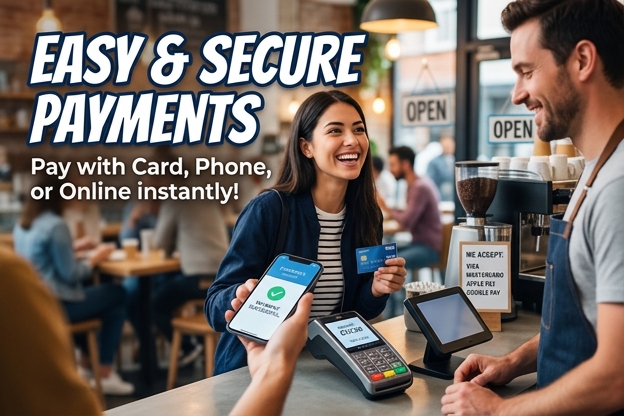
Method sprawl can create confusion. Start with customer demand and regional fit. For many retailers, that means cards, Apple Pay, Google Pay, PayPal, and selected buy now, pay later options. For cross-border commerce, local bank-based methods may matter more than adding another global wallet.
Use smart authentication
Strong Customer Authentication and 3-D Secure are necessary in many markets, but poor implementation can hurt conversion. Use exemptions where legitimate, trigger step-up checks selectively, and tailor authentication rules to transaction risk rather than applying the same challenge to everyone.
Make errors specific and recoverable
A generic “payment failed” message frustrates users and costs sales. If a card is expired, say so. If the CVV is wrong, tell the shopper. If a wallet session timed out, prompt a retry. Good recovery design saves real revenue.
Design for speed
Latency matters. A delay of even a few seconds at authorization can feel suspicious to a customer who is about to spend money. Compress scripts, reduce external dependencies, and monitor checkout speed separately from the rest of the site.
“Retailers that separate conversion optimization from payment operations usually leave money on the table. The checkout button is where UX, fraud, and issuer strategy finally meet.”
How to choose the right payment methods for your audience
There is no universal mix. A fashion retailer serving U.S. mobile shoppers has different needs from a cross-border electronics seller or a grocery chain with in-store pickup. Method strategy should be built around customer behavior, average order value, and regional preferences.
| Retail scenario | Best-fit payment methods | Primary security focus | Checkout priority |
|---|---|---|---|
| U.S. apparel ecommerce brand | Cards, Apple Pay, PayPal, BNPL | Account takeover and friendly fraud | Mobile speed and one-tap payment |
| Cross-border electronics seller | Cards, local bank methods, wallets | Issuer routing and fraud screening | Localized currency and approval rates |
| Grocery chain with pickup | Cards on file, digital wallets | Tokenized recurring payments | Fast repeat ordering |
| Luxury retail brand | Cards, bank transfer, premium wallets | Fraud review for high-ticket orders | Trust signals without friction |
The best method mix typically answers four questions:
- Which payment options does your audience already trust?
- Which methods convert best on mobile versus desktop?
- Which options improve approval rates in each region?
- Which methods increase operational complexity more than they add value?
If a payment method represents tiny volume but creates major reconciliation, dispute, or support burden, it may not deserve prime placement.
Fraud, compliance, and customer trust
Retailers need a clean balance: too little friction invites fraud, too much friction kills sales. PCI DSS compliance, tokenization, encryption, and regular access controls are baseline requirements, not differentiators. What separates strong payment operations is how intelligently these controls are applied.
According to the Verizon 2024 Payment Security Report, organizations with mature payment security practices perform better when security is embedded into operations rather than bolted on after incidents. In retail terms, that means payment security should influence product design, customer service scripts, return workflows, and vendor selection.
Where many retailers get it wrong
- They rely on static fraud rules that do not adapt to seasonality or campaign spikes.
- They treat all declines as fraud-related instead of distinguishing issuer issues from customer errors.
- They skip post-authorization monitoring and focus only on pre-transaction screening.
- They fail to align customer service with dispute prevention.
Practical controls that actually help
Use device fingerprinting, velocity thresholds, geolocation consistency checks, and risk-based authentication. Pair that with clean descriptor management, transparent order confirmation emails, and easy refund visibility. These customer-facing details reduce chargebacks because shoppers are less likely to panic or forget the purchase.
“The safest checkout is not the one with the most friction. It is the one that can tell a loyal customer from a risky transaction in real time.”
Omnichannel payment strategy for stores and ecommerce
Customers do not think in channels. They browse on mobile, buy on desktop, return in-store, and expect their receipts and payment records to follow them. Retailers that still separate store payments from ecommerce payments create unnecessary friction and weaker data.
An omnichannel payment strategy should connect:
- Unified customer profiles and payment tokens
- Shared fraud logic across channels
- Consistent refund and exchange workflows
- Buy online, pick up in store payment handling
- Centralized reporting for finance and operations
When that alignment is missing, merchants often see duplicate fraud reviews, inconsistent loyalty earning, and refund confusion. Even worse, customers may have to repeat verification steps because systems do not share tokenized payment data safely.
For in-store environments, contactless acceptance is now a baseline expectation. For ecommerce, express wallets and card-on-file experiences are the equivalent. The principle is the same across both: shorten the path to approval while preserving trust.
Common mistakes that hurt conversion
Retailers can lose revenue with a technically functioning checkout simply because the experience is working against shopper psychology.
Too many choices at the wrong moment
Offering every conceivable payment method can reduce clarity. Keep the most relevant options visible first, especially on mobile.
Hidden fees or surprise taxes
Baymard’s 2025 findings continue to show that extra costs are a leading abandonment trigger. If charges appear late, the payment page gets blamed even when pricing strategy caused the issue.
Poor decline recovery
Many merchants do not let customers easily switch payment methods after a failure. If a card declines, the next best option should be one tap away.
Overaggressive fraud blocks
False declines can quietly cost more than visible chargebacks. Premium customers, international buyers, or shoppers using VPNs for privacy can be penalized if rules are too crude.
No payment analytics discipline
If you cannot break down soft declines, hard declines, issuer responses, wallet usage, and challenge rates, you are guessing. Good reporting is not a finance luxury. It is a growth tool.
A practical rollout plan for retailers
Most payment improvements fail because teams try to redesign everything at once. A phased rollout works better and reduces disruption.
- Audit current performance: Measure conversion, approval rates, decline categories, chargebacks, wallet adoption, and checkout speed.
- Map customer payment preferences: Split by device, geography, and repeat versus first-time buyers.
- Fix obvious friction: Remove unnecessary fields, improve error handling, and optimize mobile wallet placement.
- Strengthen payment routing and fraud logic: Review acquirer setup, issuer response patterns, and authentication triggers.
- Test in controlled segments: Run A/B tests by market or traffic source before full deployment.
- Monitor post-launch weekly: Track whether gains are coming from better approvals, lower abandonment, or both.
This sequence is especially useful for mid-market retailers that cannot afford a full replatforming project but still need measurable gains.
How iGaming Payment approaches real-world optimization
At iGaming Payment, we have seen the same pattern across fast-moving merchants: payment issues rarely come from a single cause. More often, weak approval logic, clunky authentication, and limited method choice stack together until conversion drops.
I remember working with a specialty ecommerce brand that had healthy traffic but disappointing paid media efficiency. On the surface, the checkout looked acceptable. But when we reviewed transaction logs, we found a large share of soft declines from mobile users and unnecessary authentication prompts on low-risk repeat orders. After reworking wallet placement, adjusting routing logic, and tightening fraud rules around actual risk signals instead of blanket triggers, approval rates improved and support complaints about failed payments fell within the first month.
In another engagement, I saw a retailer assume chargebacks were mainly caused by stolen cards. The data told a different story. Many disputes came from poor billing descriptor recognition and delayed refund communication. We helped restructure confirmation messaging, refine refund notifications, and separate high-risk orders for secondary review. The result was not only fewer disputes, but also stronger customer satisfaction because legitimate buyers no longer felt punished by generic anti-fraud friction.
Those experiences reinforce a simple point: the best retail payment solution is rarely the one with the most features on paper. It is the one that fits your real traffic, your actual customers, and your team’s ability to operate it consistently.
What to measure after launch
Payment optimization is never “done.” The strongest teams keep a tight scorecard and review it often.
- Authorization rate: Overall and by method, issuer, region, and device.
- Checkout completion rate: From payment-page entry to successful order.
- False decline rate: Estimated through reattempt analysis and support review.
- Chargeback ratio: Broken down by fraud, friendly fraud, and service issues.
- Wallet share: Especially on mobile, where speed often drives performance.
- Average checkout time: A practical signal of friction.
- Refund turnaround visibility: Important for trust and dispute prevention.
If those metrics move in opposite directions, dig deeper. For example, lower chargebacks paired with lower approvals may mean your fraud settings became too strict. Higher wallet adoption with flat conversion may mean the placement is better, but issuer approval logic still needs work.
Conclusion
Retail payment strategy sits at the center of revenue protection and customer experience. The merchants that perform best build checkout around real customer behavior, use security with precision, and measure approval quality as carefully as they measure traffic.
At iGaming Payment, our recommended next steps are straightforward:
- Run a payment performance audit focused on approval rates, soft declines, and mobile drop-off.
- Prioritize the payment methods your customers actually use, then place them prominently.
- Review fraud and authentication rules quarterly so security keeps pace with buying behavior.
If your checkout still feels like a final hurdle instead of a smooth handoff, your payment stack likely needs refinement rather than more traffic.
References
- Baymard Institute, 2025 checkout research: Ongoing data on cart abandonment and checkout usability patterns.
- Worldpay Global Payments Report, 2024: Market-level insight into payment method adoption across regions and channels.
- Visa merchant guidance, 2024: Practical perspective on authorization trends, fraud controls, and approval optimization.
- Verizon Payment Security Report, 2024: Findings on operational payment security maturity and risk management.
- National Retail Federation, 2024-2025 retail security coverage: Industry context on fraud pressure and retailer response.
FAQ
What is a retail payment solution?
A retail payment solution is the system a merchant uses to accept payments across online or in-store channels. It usually includes a gateway, processor, fraud tools, tokenization, reporting, and the checkout interface customers interact with.
Why do shoppers abandon checkout at the payment stage?
Common reasons include:
Too many form fields
Surprise fees or taxes
Payment method mismatch with customer preference
Generic failure messages after a decline
Security friction that feels excessive for a low-risk purchase
Which payment methods should most retailers offer first?
For many U.S. retailers, the starting mix is:
Major credit and debit cards
Apple Pay and Google Pay
PayPal
Select buy now, pay later options if average order value supports it
How can retailers improve security without hurting conversion?
The best approach is risk-based control, not blanket friction. Focus on:
Tokenization and PCI-compliant storage practices
Smart 3-D Secure use instead of challenging every transaction
Device and velocity checks for suspicious behavior
Clear order confirmations and billing descriptors to reduce disputes
What metrics matter most after a payment upgrade?
Track these first:
Authorization rate
Checkout completion rate
False declines
Chargeback ratio
Wallet adoption on mobile
Average checkout time
How does Retail Payment Solution: Best Practices for Secure and Seamless Checkout help omnichannel merchants?
It gives omnichannel merchants a framework for connecting store and ecommerce payments, reducing fraud gaps, keeping refunds consistent, and making the customer experience feel unified across devices and locations. That usually leads to faster repeat purchases and better reporting for operations and finance.